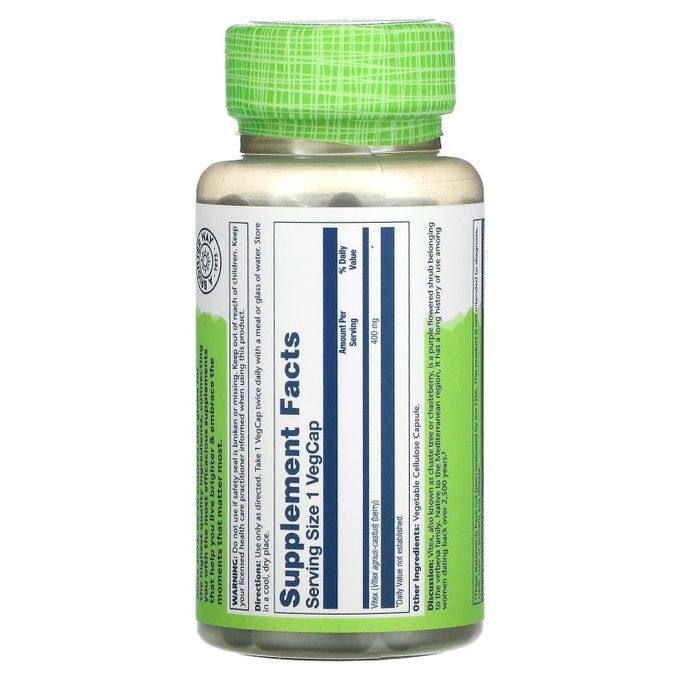

Description
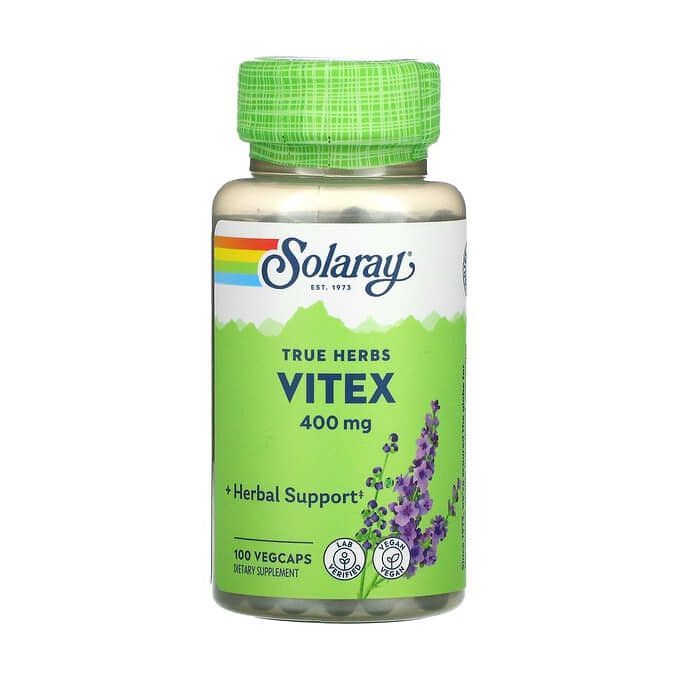
Vitex has also been called chaste tree. Vitex has been used by women for thousands of years. Vitex grows in Mediterranean countries and Central Asia. The dried fruit, which has a peppery flavor and aroma, is used in herbal preparations.
Historical or traditional use (may or may not be supported by scientific studies)
Hippocrates, Dioscorides, and Theophrastus mention the use of vitex in a wide variety of conditions, including hemorrhages following childbirth and aiding in the "death of subsequent childbirth." Fruit and plant decoctions were also used in sitz baths for uterine diseases. Furthermore, vitex was believed to suppress libido and inspire chastity, which explains one of its common names, chaste tree.
Active constituents
Vitex contains several different components, including flavonoids, iridoid glycosides, and terpenoids. The whole fruit extract, rather than any of its individual constituents, appears to be necessary for vitex's medicinal activity. Vitex does not contain hormones. Vitex's benefits stem from its actions on the pituitary gland, specifically on the production of a hormone called luteinizing hormone (LH). This indirectly increases progesterone production and helps regulate the menstrual cycle. Vitex also controls prolactin secretion. The ability to reduce mildly elevated prolactin levels may benefit some infertile women as well as some women with breast tenderness associated with premenstrual syndrome.
A controlled clinical trial showed that women taking 20 mg daily of a concentrated vitex extract for three menstrual cycles experienced a significant reduction in PMS symptoms, including irritability, mood swings, headaches, and breast tenderness. Another double-blind trial showed that women taking vitex had slightly greater relief from PMS symptoms, including breast tenderness, cramps, and headaches, than those taking vitamin B6. These trials confirm the findings of preliminary trials of vitex in women with PMS. Vitex (32.4 mg daily), combined with certain homeopathic remedies, was also found in a double-blind trial to successfully treat breast tenderness (also known as mastalgia).